Employment After Foster Care
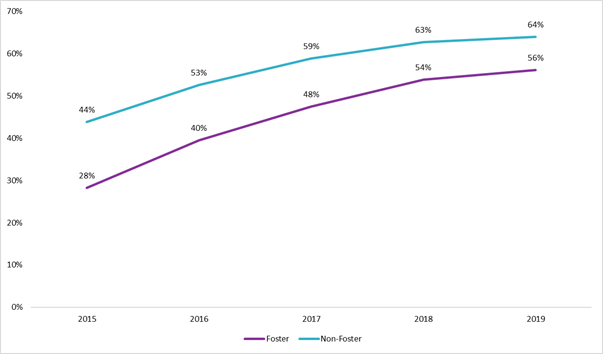
Between 2017 and 2023, the gap between employment rates for young adults who have experienced foster care and those who have not, remained fairly consistent in Washington State. During the same time period however, the gap in median earnings between the two groups widened, and that increase cannot be attributed to differences in number of hours worked. Longitudinal analysis shows that over time, while the employment gap remains steady, the gap in median earnings continues to increase. It is widest for people without post-secondary education credentials, and narrowest for those with four-year post-secondary credentials, but the earnings gap between people who have experienced foster care and those who have not persists across all levels of educational attainment.
Employment Among 2017 Cohort of Young Adults, by Former Foster Status, 2017-2023
Employment Among 2017 Cohort of Young Adults, by Former Foster Status, 2017-2023