
Introduction
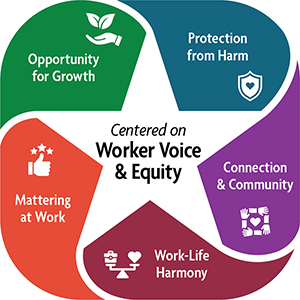
The goal of the Retention Toolkit webpage, which draws from the U.S. Surgeon General’s Framework for Workplace Mental Health & Well-Being, is to ensure ESIT-provider agencies have access to a comprehensive set of resources that can support them in their staff retention efforts.
The ESIT State Leadership Team recognizes that positive social-emotional outcomes are foundational for infants and toddlers. The same can also be said about staff at ESIT-provider agencies. Mental health and well-being are foundational to the support and retention of staff providing critical services to infants, toddlers, and their families.
Recent research reported on the Surgeon General’s website shows:
- 76% of U.S. workers experienced at least one symptom of a mental health condition. Source: MindShare Partners' 2021 Mental Health at Work Report
- 81% of workers reported they will be looking for workplaces that support mental health. Source: APA's 2022 Work and Well-Being Survey Results
National research aligns with evidence gathered from service providers in Washington state's system. It shows there are providers who love their work but sometimes experience challenges that causes them to think about leaving their job. We can work together to begin building on the strengths to address the needs the research tells us will support a provider’s decision to stay.
A recent study of 287 providers in Washington state showed 63% of participants reported feeling satisfied with their job (Stryker, 2024). However, 33% expressed uncertainty and 3% reported dissatisfactions with their role.
While more than half of participating providers are satisfied in their jobs, more than 30% have plans to explore new career options within the next year. Providers identified supportive and collaborative work environments, work-life balance, pay and benefits, coworkers, and nature of work, as key factors in their decision to stay in their role or leave.
Participants overwhelmingly expressed positive feelings about the connections and sense of belonging they experienced in their workplaces. The study states "providers who felt valued, supported, and recognized for their expertise were more likely to experience higher levels of job satisfaction and exhibit greater intention to remain in their positions." (Stryker, 2024)
Protection from Harm is the first of five components of the Surgeon General’s Framework.
Prioritize Physical and Psychological Safety
Avoiding dangerous situations and developing habits that support personal well-being will promote increased awareness, safety, and confidence. The links below provide resources for ESIT provider agencies navigating potential safety challenges found in home- and community-based services. These resources will help agencies as they develop safety plans, staff training, policies, and procedures. (Framework, page 13)
Videos:
6 Ways to Stay Safe During Home Visits
Home Visit Tag Along: Steps to Staying Safe
Web Resources:
Oregon's Home Visitor Safety Guide (includes safety plan template)
Home Visiting Safety: Be Aware and Trust Your Instincts (a training activity for early intervention staff)
A Guide for Domestic Violence Advocates
Mandatory Reporting of Child Abuse and Neglect (describes how to make a report and what happens once a report is made)
Ergonomics (at your desk, in the car, and moving children)
How Home Visitors can Protect Themselves and Families Receiving Services from Diseases that can be Spread from Person to Person. (CDC guidance addresses COVID-19 and other communicable diseases)
Enable Adequate Rest
Lack of quality sleep, possibly from stress caused by high caseloads and long work hours can put the physical, emotional, and mental health of providers in danger. Providers who do not get good rest are more likely to get injured on the job or make mistakes. Long work hours have also been shown to raise workers’ risk for exhaustion, anxiety, and depression. Feeling constantly tired also reduces the rate of productivity. (Framework, pg.14)
Videos
Self-Care to Communities of Care (A systemic perspective on self-care)
Using Five Minutes of Self-Care to Survive Burnout
Web Resources:
Burnout, Vicarious Trauma, and Compassion Fatigue
Normalize and Support Mental Health
Organizations can ‘normalize and support’ mental health by modeling, communicating, and regularly promoting access to services. Providing comprehensive health care coverage that includes access to mental health benefits is an important first step. Agencies can promote access to care while also ensuring confidentiality by supporting access to quality and affordable mental health services—including telehealth, on-site, and off-site after-hours care—and encouraging time off for staff to support their mental health. (Framework, page 14)
Videos:
Why You Should Try Therapy Yesterday (a therapist’s personal experiences with therapy and compelling reasons to give it a try)
Web Resources:
Let’s Talk: Normalizing the Workplace Mental Health Conversation (A personal story of sharing a mental health diagnosis at work)
Mental Health Works Guide (from the Center for Workplace Mental Health)
Operationalize Diversity, Equity, Inclusion, and Accessibility (DEIA) Norms, Policies, and Programs
Workplaces that are inclusive are those workplaces where employees, including those with disabilities, and from diverse racial and socioeconomic backgrounds, feel safe to be themselves and share their feelings. This applies to relationships between providers and families, supervisors and employees, and within interdisciplinary teams. Agencies can prioritize diversity, equity, inclusion, and accessibility (DEIA) norms through effective policies, procedures, and training programs. Team diversity and inclusive work environments start with inclusive leadership. (Framework, page 15)
Videos:
Let’s Stop Talking About Diversity and Start Working Toward Equity (Outlines evidence and strategies for promoting equity as a core human need in the workplace)
Belonging, a Critical Piece of Diversity, Equity and Inclusion (outlines key ingredients for belonging and how to achieve them)
Web Resources:
True Confessions: Checking My Biases with Family Centered Practices
Race and Poverty Bias in the Child Welfare System: Strategies for Child Welfare Practitioners (has application for ESIT providers, also)
Competitive Wages and Benefits
ESIT provider agencies employ a variety of highly sought after and specialized direct service providers. While salary and benefits are not the only reason an employee chooses to stay or go, it is a foundational factor in staff retention. PricewaterhouseCooper conducted a survey of 3,000 workers from a range of industries and found that 56% were financially stressed about finances. Among that group, 49% reported that concerns about money “had a severe or major impact on their mental health in the past year.” (page 25)
Wage and Benefit Study
A common theme across conversations with local ESIT program administrators is the need for more competitive wages. Planning for a wage and benefit study that will inform approaches to compensation for ESIT provider agencies will begin soon. If you have an interest in participating, or have clarifying questions, please reach out to valerie.arnold@dcyf.wa.gov, or call 360-485-7773.
Engage Workers in Workplace Decisions
Organizations that take an inclusive approach to workplace decisions support employees’ personal investment in the process. Involving staff at all levels in the development of an agency’s vision, mission, values, and strategic planning, promotes a greater level of employees’ investment, enthusiasm, and commitment to the organization, and the important work being done. (page 25-26)
Videos
From Employee Engagement to Employee Experience (62 minutes. How dynamic organizations conceptualize and create a truly great employee experience.)
Employee Engagement- Who’s Sinking Your Boat? (4 minutes. Learn from employee engagement research what engaged employers can do to keep their organizations afloat.)
What Makes us Feel Good About our Work? (20 minutes. In this TED Talk, Dan Ariely presents two experiments that reveal our unexpected and nuanced attitudes toward meaning in our work.)
Web Resources
Why Managers Should Involve Their Team in the Decision-Making Process (Harvard Business School Online makes a strong case for an inclusive decision making process as leading to better decisions.)
Here's how you can engage employees in decision-making processes (Seven simple strategies from LinkedIn that support shared decision-making.)
Build a Culture of Gratitude and Recognition
Organizations, and especially supervisors, can promote a culture of gratitude and recognition at work “where workers feel seen, respected, needed, and valued.” Promoting a culture of gratitude goes a long way in supporting healthy teams that are required to provide comprehensive, high-quality services at all levels of the ESIT statewide system. Recognition for a job well done prevents employees from feeling like they have a thankless job, or work in a thankless profession. (page 26)
Videos
The Power of Appreciation (18 minutes. Explains the difference between being recognized for performance and genuinely appreciated for who you are.)
How to Show Your Team You Care (17 minutes. Team-appreciation ideas that will motivate and inspire your team.)
Why You Need to Show Employee Appreciation and 3 Ways to Do It (6 minutes. Describes what employees really need to feel valued at work.)
Connect Individual Work with Organizational Mission
Regardless of the type of work an employee does for an organization, having a collective understanding of the idea that all of us are working toward a common vision, mission, and set of shared values is motivational and provides context, clarity, and meaning to the work. “Organizations can help workers see the connections between their day-to-day work and the organizational purpose and mission.” (page 26)
Videos:
Connecting Employees to Purpose and Meaning (2 minutes. Why leaders need to engage employees by connecting employees to a sense of purpose at work.)
Three Things that Make a MEANINGFUL Vision (4 minutes. Simon Sinek outlines three critical factors that lead to a meaningful mission.)
Podcasts:
How to Keep Hybrid Workers Connected to the Organizational Mission (On this episode, Berkely Hass Business school professors answer a question from HubSpot CEO Yamini Rangan about how to keep employees connected whether they’re at home or in the office.)
Web Resources:
How to Connect Employees to Your Company’s Purpose (Harvard Business Review describes the importance of an inside-out and bottom-up dialogue, as this is how we human beings can ultimately connect with a broader mission.)
Three Steps to Gauge Your Team’s Connection To Mission (Outlines steps organizations can take to connect individual works’ impact on achieving the larger mission.)