Youth School Engagement
The second DCYF education outcome goal is that youth are engaged in school. Youth who feel more connected or committed to school are more likely to achieve positive academic outcomes and are less likely to experience mental health issues.
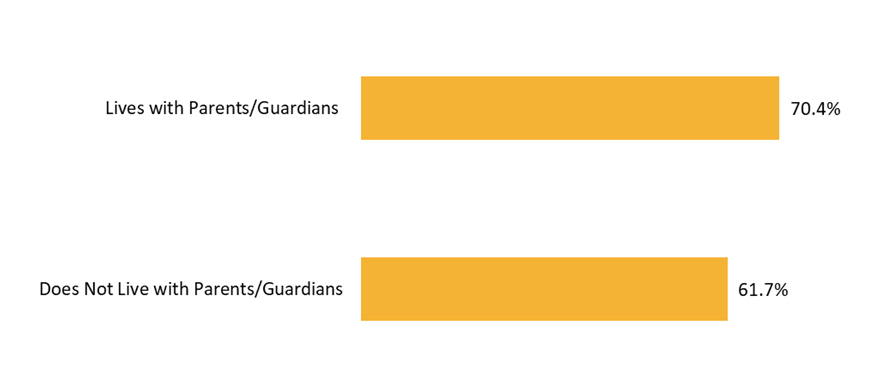
Engagement in school can be measured by the Healthy Youth Survey’s index of engagement in school, which captures information on decision-making opportunities at school, one-on-one opportunities with teachers, opportunities to work on special projects, extracurricular opportunities, and feeling a part of class activities or discussions. Results show that youth who live with their parents/guardians are more likely to report high levels of school engagement than youth not living with their parents/guardians.
10th Graders with High Levels of School Engagement, by Living Situation, 2023
10th Graders with High Levels of School Engagement, by Living Situation, 2023